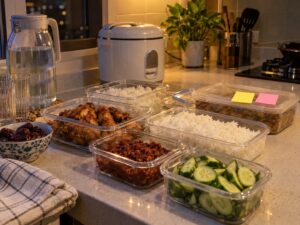
Don’t be afraid to bring halal RTE meals overseas – here’s what we should know before flying.
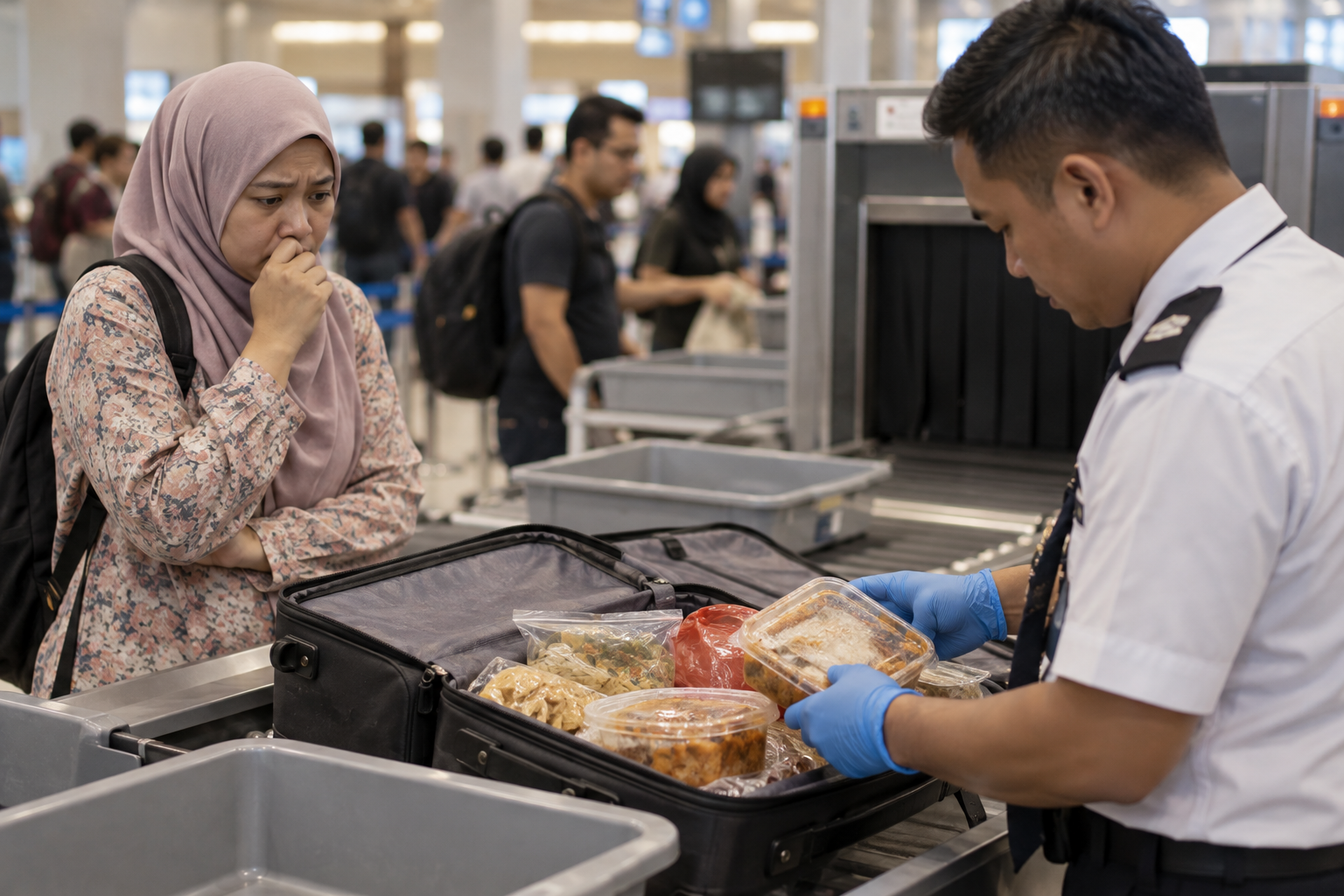
Whether for umrah, leisure, studies or work assignments, bringing food from home provides peace of mind: familiar taste, halal certainty and a supply when food options at the destination are limited. But every country has its own food entry rules, and a wrong assumption can mean our supplies are disposed of at the border. This guide explains the safe general principles, examples from popular destinations, and what makes a practical travel pack.
1. Why many travellers bring their own supplies
Halal certainty is the main reason for most of us, especially in destinations where trusted halal food is hard to find. Others bring supplies because of allergies or special diets, to manage costs, or because a packed itinerary leaves no time to look for meals. For group organisers such as travel agencies, umrah operators and companies sending staff abroad, organised meal supply is not just convenience; it is part of managing the group.
2. Rules differ by destination
There is no single rule that applies everywhere. Each destination sets its own allowed food types, approved sources and quantity limits. Examples from the official pages of popular destinations:
- Singapore (SFA): meat products are only accepted from approved sources, and Malaysia is not listed for beef, mutton, pork or poultry. Other processed food without meat, fish or eggs, such as biscuits and nuts, is limited to 5kg per traveller.
- United Kingdom (GOV.UK): from non-EU countries, meat and dairy products cannot be brought in at all. Fish and processed fish products are allowed up to 20kg per person.
- Australia (Department of Agriculture): all food must be declared on arrival, and its biosecurity is among the strictest in the world. Meat products are classed as high-risk goods.
- United States (CBP): all food items must be declared, and many meat products from certain countries are prohibited. Failing to declare can bring a penalty, even when the item itself would have been allowed.
These rules can change at any time. Before flying, check the destination’s official food or customs agency page, not just a friend’s experience or an old article.
3. General principles that keep travel smooth
- Check the destination rules on the official page before buying or packing any food.
- Declare all food you carry on arrival. In most countries, honest declaration brings no penalty; items that are not allowed are at worst disposed of.
- Keep food in its original factory-labelled packaging, so border officers can see the contents and expiry date.
- Bring a reasonable quantity for personal use; large quantities may be treated as commercial import with different requirements.
- Understand the difference between cabin and checked baggage: liquids, sauces and gravies in cabin bags are limited to 100ml per container, so saucy packs belong in checked baggage.
- The final decision always rests with the officer at the border.
4. What makes a practical travel pack
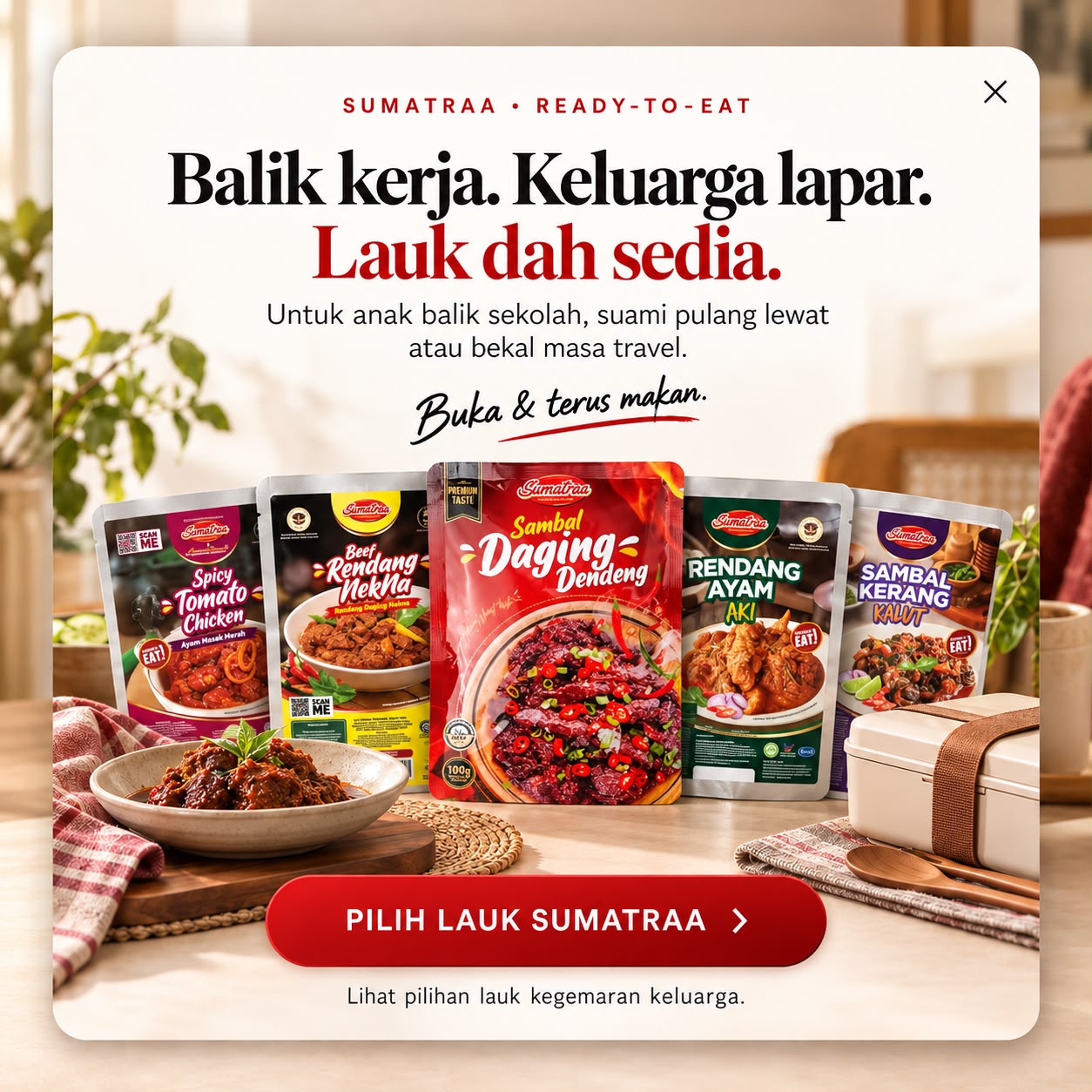
A travel-friendly supply has several qualities: stable at room temperature so it does not depend on refrigeration; factory-sealed with a clear label; light and compact for luggage; and a shelf life that covers the whole trip. Ready-to-eat (RTE) meals based on retort technology meet these qualities: they are cooked and sealed to keep at room temperature, and only need heating following the label directions before eating. Sumatraa RTE products, for example, are stable at room temperature with an unopened shelf life of up to 2 years depending on the product, so check the date on each label, and their halal status can be verified through the official JAKIM portal. Every destination remains subject to its own rules: these qualities help with handling and storage, not a guarantee of entry.


5. For groups and travel organisers
For organisers managing meals for a group of travellers, early planning simplifies everything: quantities can be matched to the number of participants and the length of the trip, and each destination’s rules can be checked well in advance. For bulk orders, Sumatraa’s minimum order quantity is 500 packs, and order preparation takes 5 to 10 working days depending on quantity. To request a quotation, prepare a name, email, phone number and enquiry details such as product type, estimated quantity and date needed.